Training Program
What to Expect


Co-Op
Herding Terms
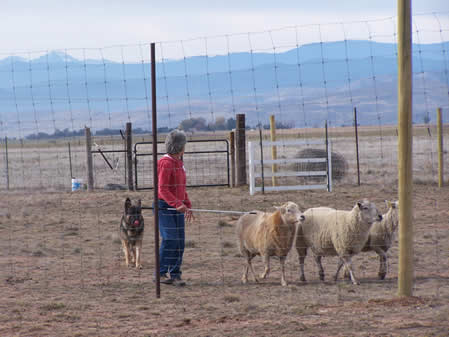
Fetching
The dog brings the stock to the handler.
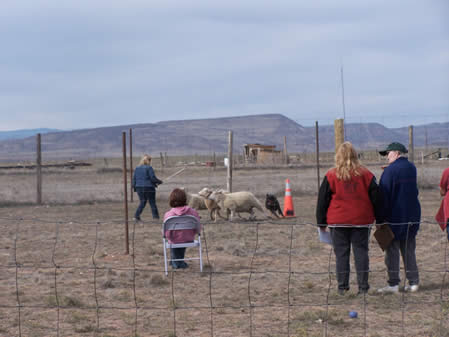
Driving
The dog drives the stock away from the handler.
Flanking
The dog moves around the outside of the stock.
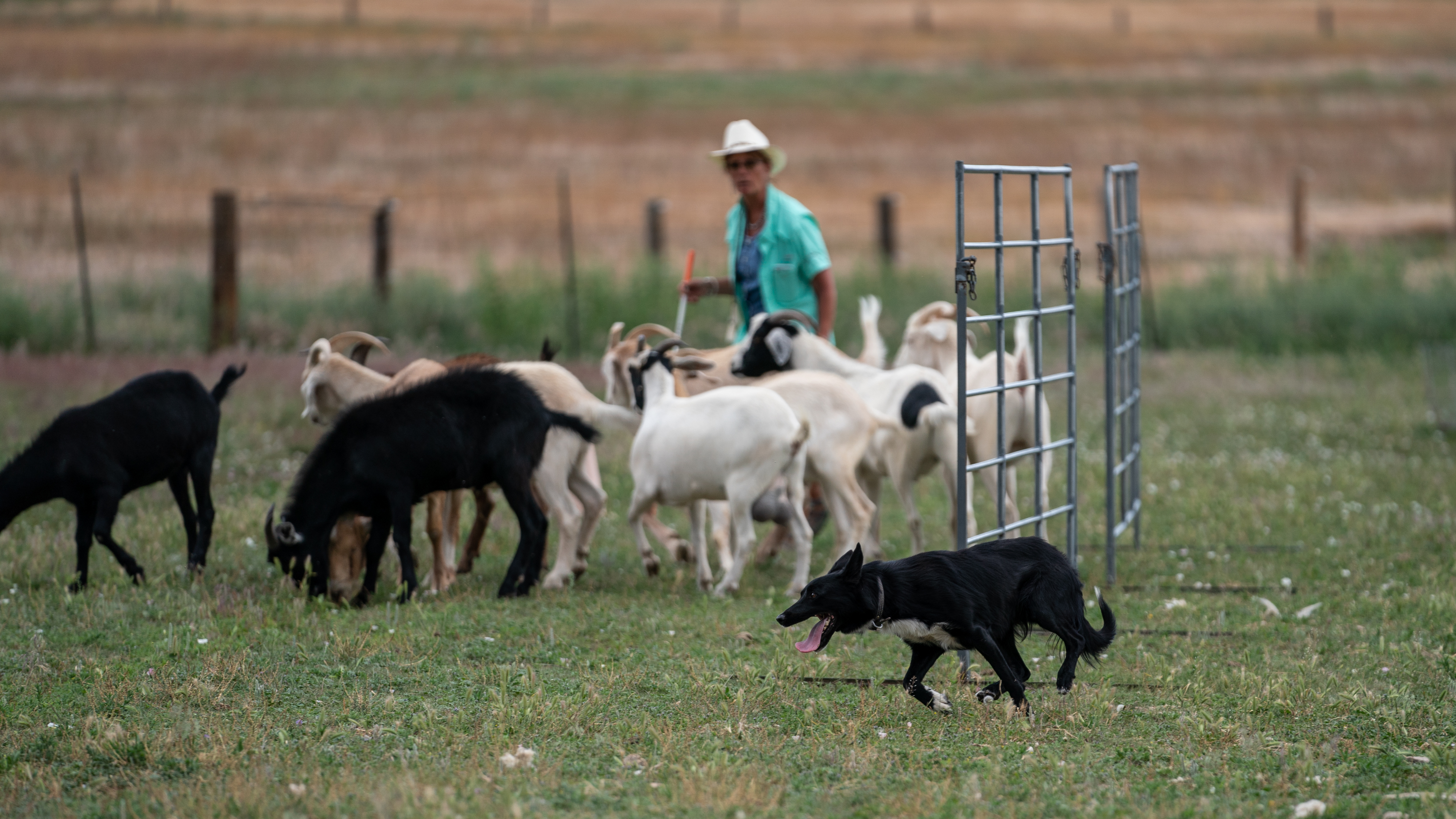
“Go By”
Moving clockwise (“by the clock”).
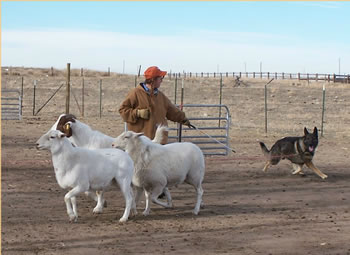
“Away”
Moving counter-clockwise (“away from the clock”).
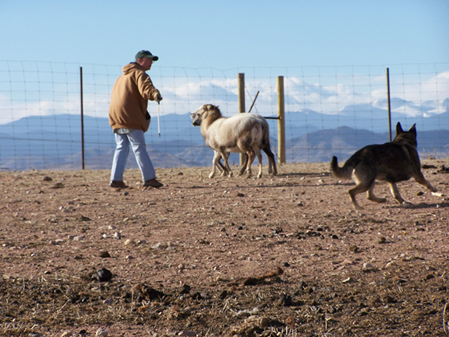
“Walk Up”
Dog walks towards the stock.
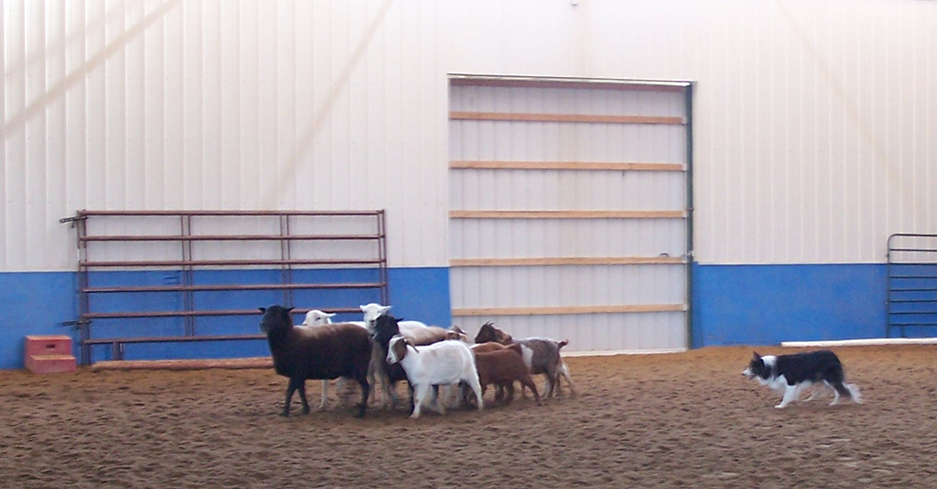
“Go / Get Back”
Dog turns off and moves away from the stock.
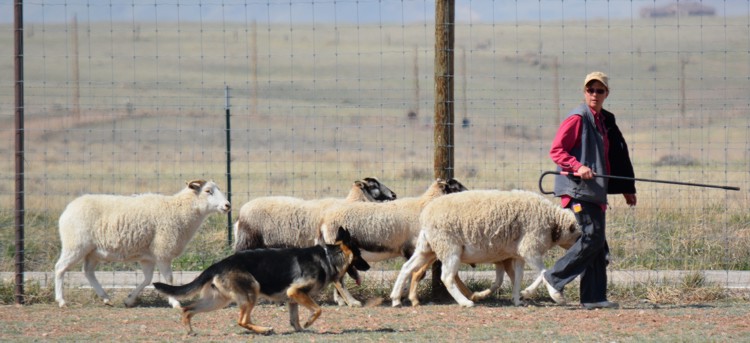
“Look Back”
Dog turns to check stock behind.
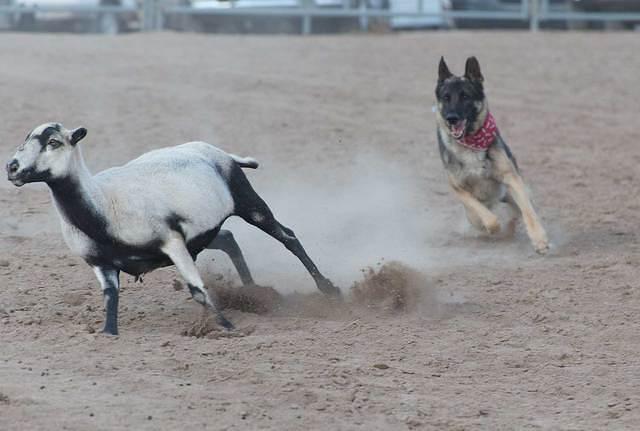
“That’ll Do”
The dog is finished; disconnect from stock and return to the handler.
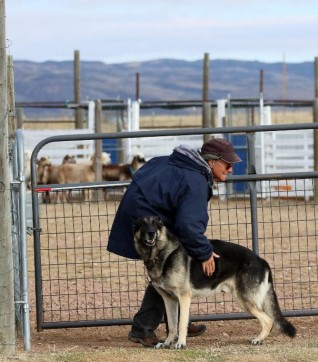
Styles of Herding
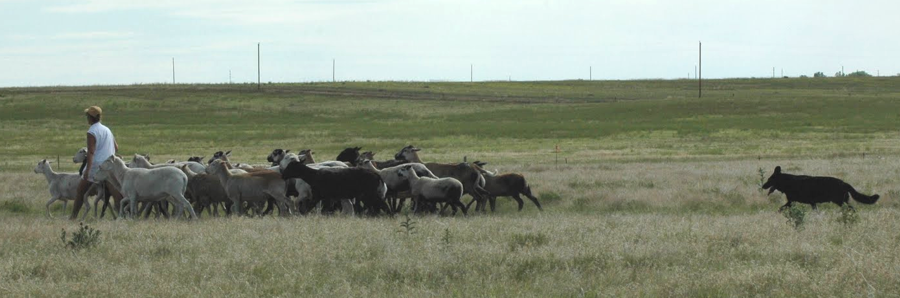
Different breeds tend to influence stock in different ways. Here are two common styles you’ll see at RTN.
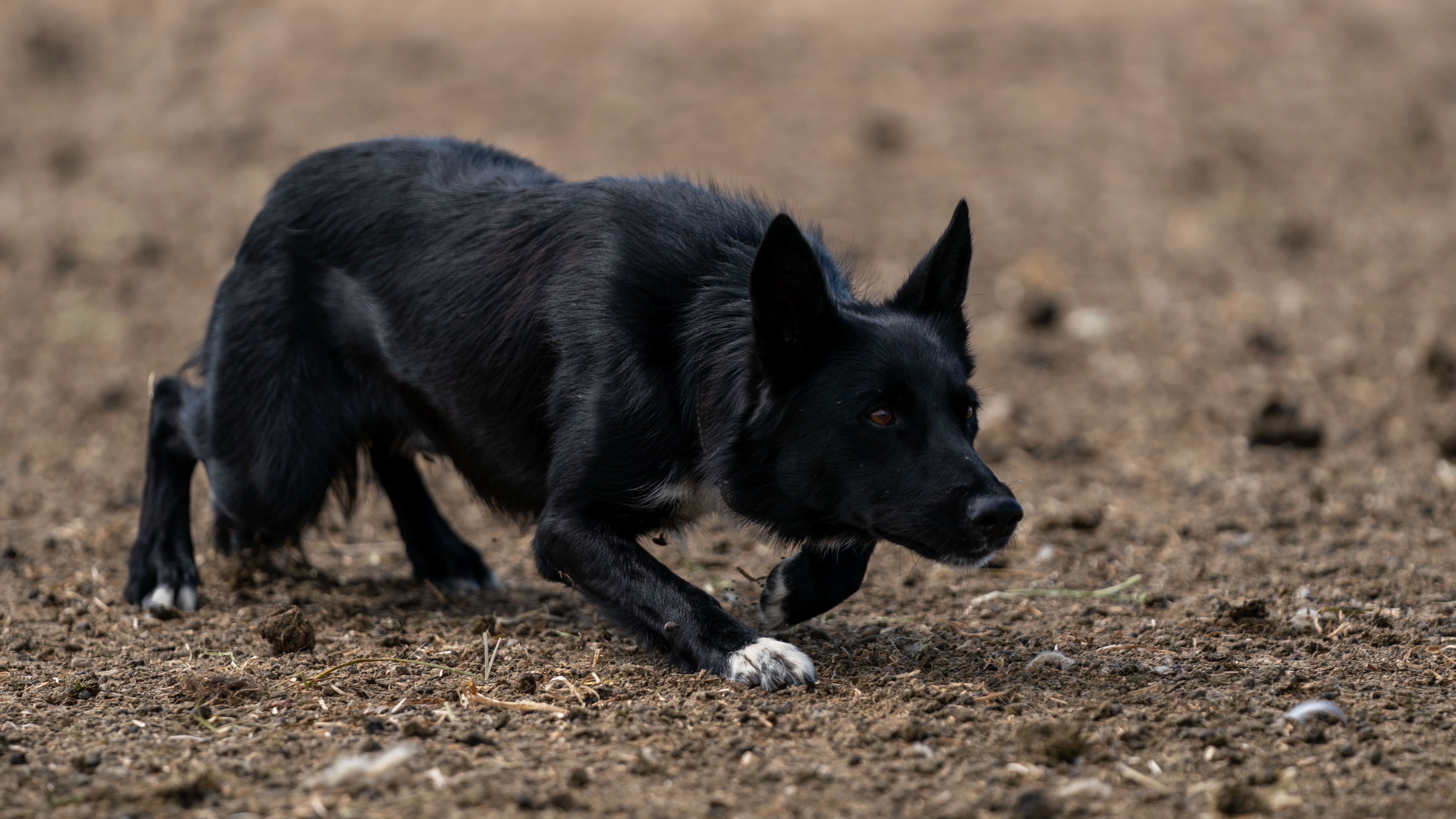
“Tight eyed”
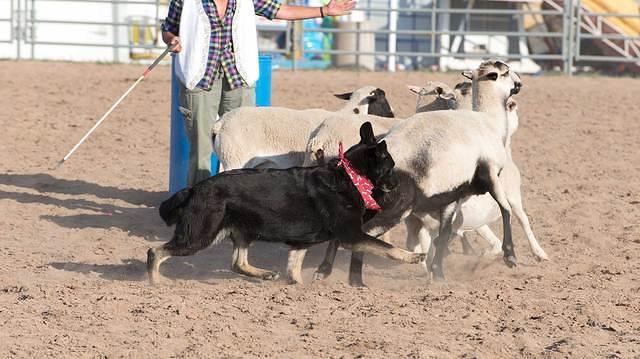
Tight eyed dogs use intimidation to get the stock to do its bidding.
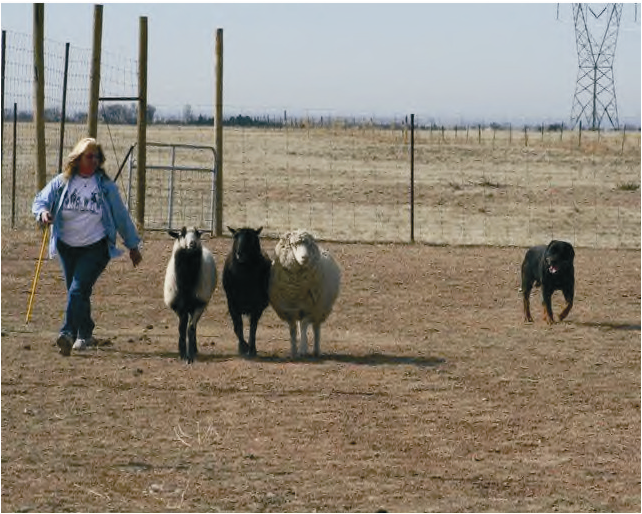
Upright or “Loose eyed”
Upright or loose eyed dogs influence the stock with more of a guardian/enforcer presence.
AKC
Elements | Tests | Trials
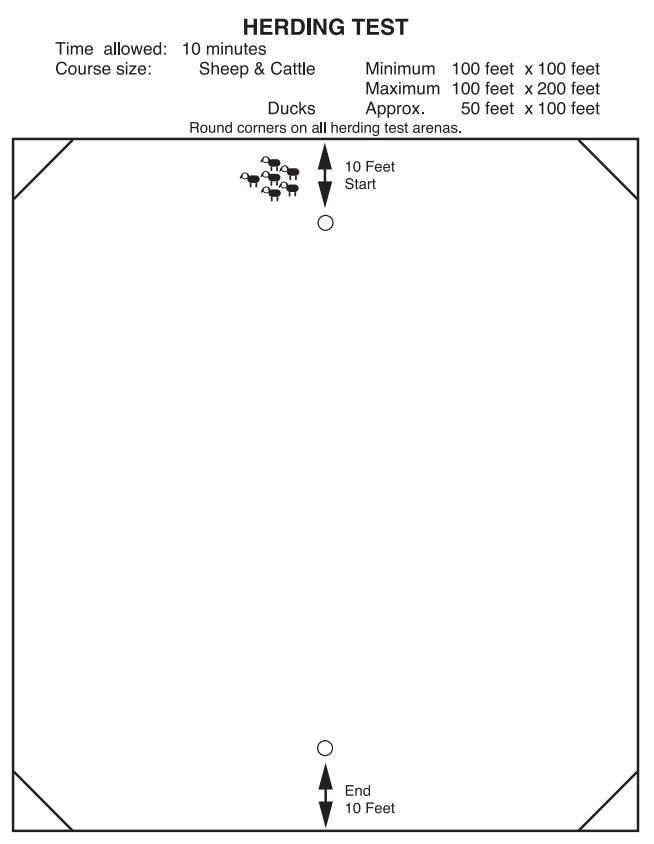
Herding Test — “HT” (Pass/Fail)
Dogs enter small arena (100 x 100 ft) on lead.
Three head of sheep or goats are placed in the arena. The dog is expected to wait until the handler asks the dog to move — either to flank around and gather or walk up. The handler/dog must move stock in a controlled manner back & forth across the arena between two cones (generally three passes). The dog must flank in both directions (By and Away). The handler must call the dog off the stock — “That’ll Do”.
You need 2 legs under different judges to get the HT title.
Pre-Trial — “PT” (Pass/Fail)
This class is in a bigger arena (100 x 200 ft) and shows the basic elements found on the trial course.
Gather, controlled movement, pause/change of direction, and pen. Handler leashes the dog at the end — “That’ll Do”.
Dog needs 2 legs under different judges.
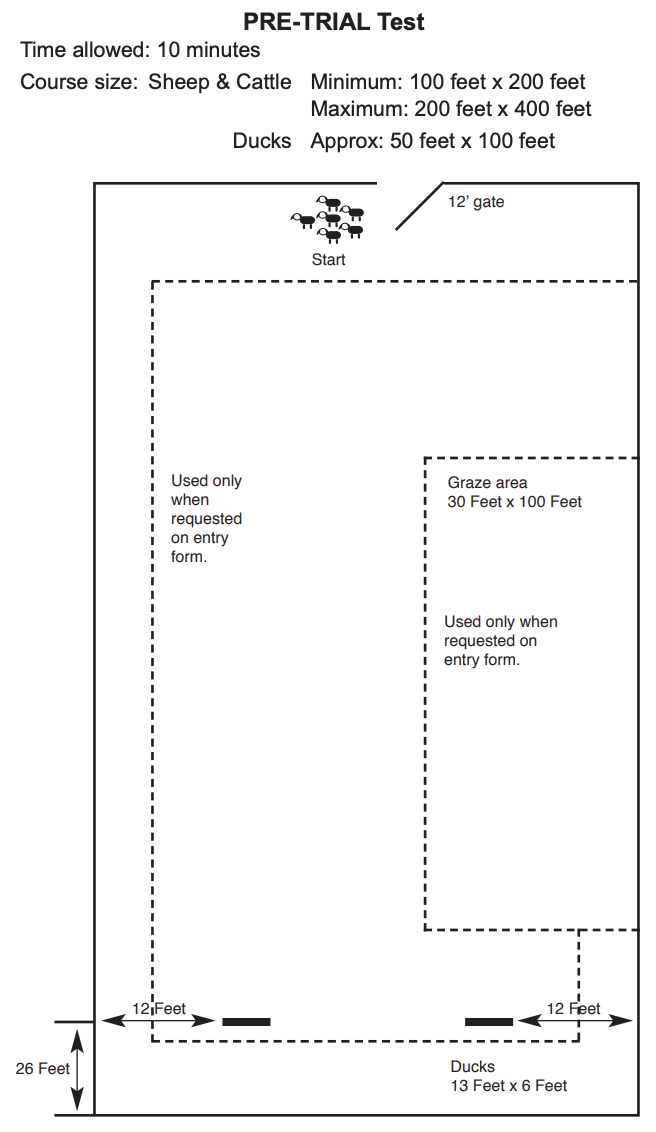
PT with Boundary + 3-sided Graze (Pass/Fail)
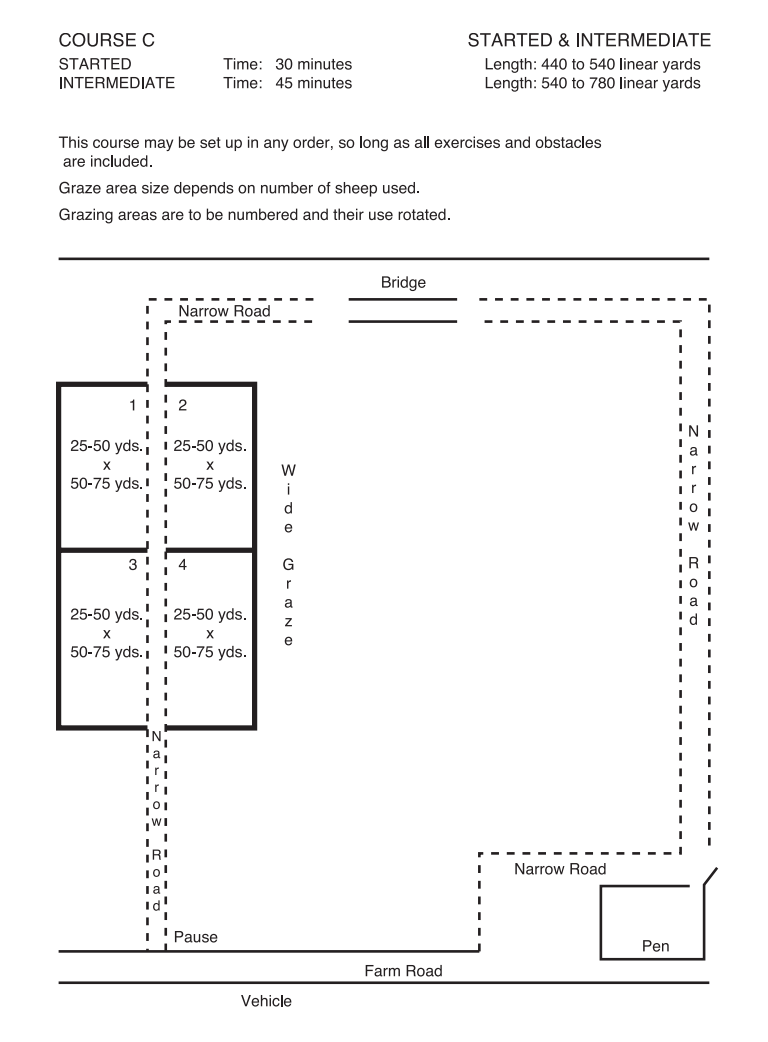
This class is in a bigger arena (100 x 200 ft) and shows the basic elements found on the C course.
The handler releases the dog; stock move down the fence and around panels. The dog works the flock from its side of the border. The team demonstrates a controlled graze, a pause, and then proceeds to pen — “That’ll Do”.
Dog needs 2 legs under different judges.
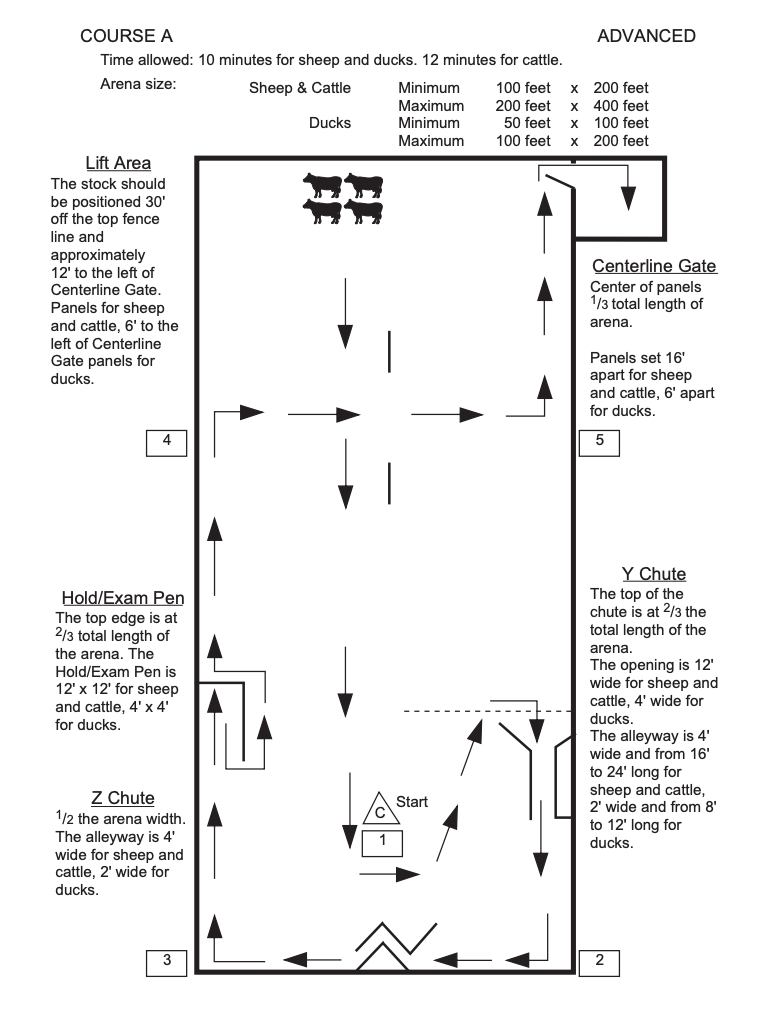
A-Course (Arena)
3 levels: Started, Intermediate, Advanced. Judged by points and time.
3 qualifying legs needed under different judges; minimum score requirements apply per obstacle.
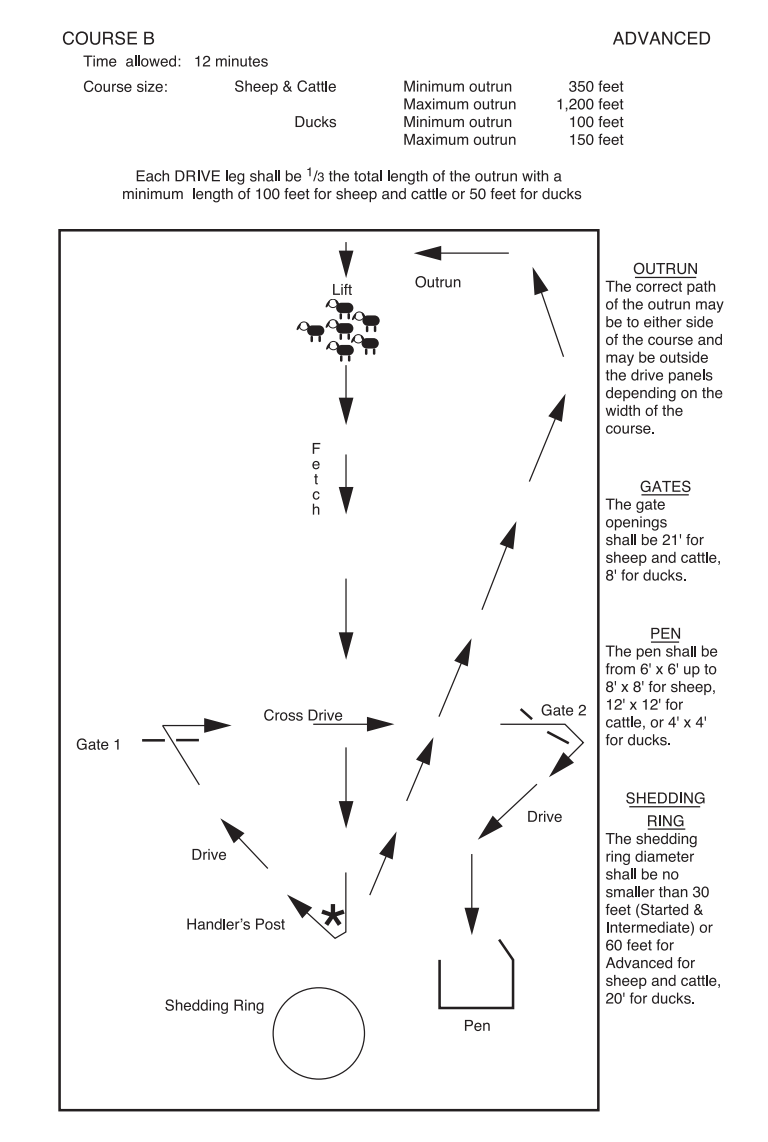
B-Course (Pasture/Field)
3 levels: Started, Intermediate, Advanced. Judged by points and time.
3 qualifying legs needed under different judges; minimum score requirements apply per obstacle.
C-Course (Tending)
Do you have a tending breed?
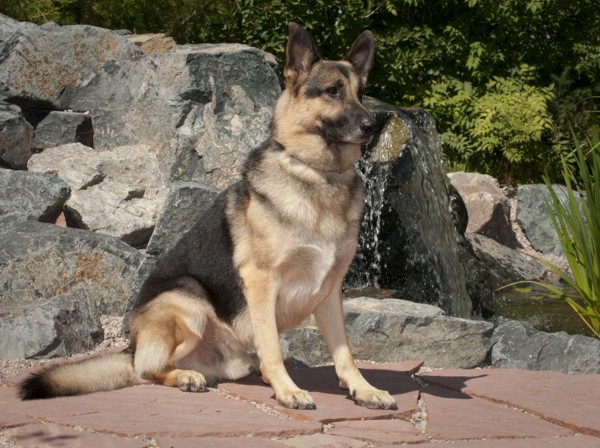
German Shepherds, Beaucerons, Bouviers, Briards, Belgian Shepherds, Tervurens, Malinois, and Bearded Collies are a few breeds that instinctually look for borders and excel in this style of herding.
D-Course (Ranch)
The D course emulates ranch work and incorporates multiple spaces and practical tasks (sorting, chutes, loading, setting stock) alongside classic trial elements. Runs are judged by points and time.